
The Origins of Caste
About the Exhibition
In 2009, a trainee curator working at Leicester Museum & Art Gallery noticed a collection of paintings. They were in a state of disrepair and had been used for restoration training, these paintings revealed hidden secrets of our past.
Not only were these paintings the first pieces of art to be donated to the museum, but they were also one of the first forms of racial classification to be done in pictorial form and one of the very first collections from the Casta Paintings Genre.
Supported and funded by the National Lottery Heritage Fund, the paintings underwent an extensive restoration process.
Enter the Casta Online ExhibitionThis Project is funded by 


GET A BRIEF INSIGHT
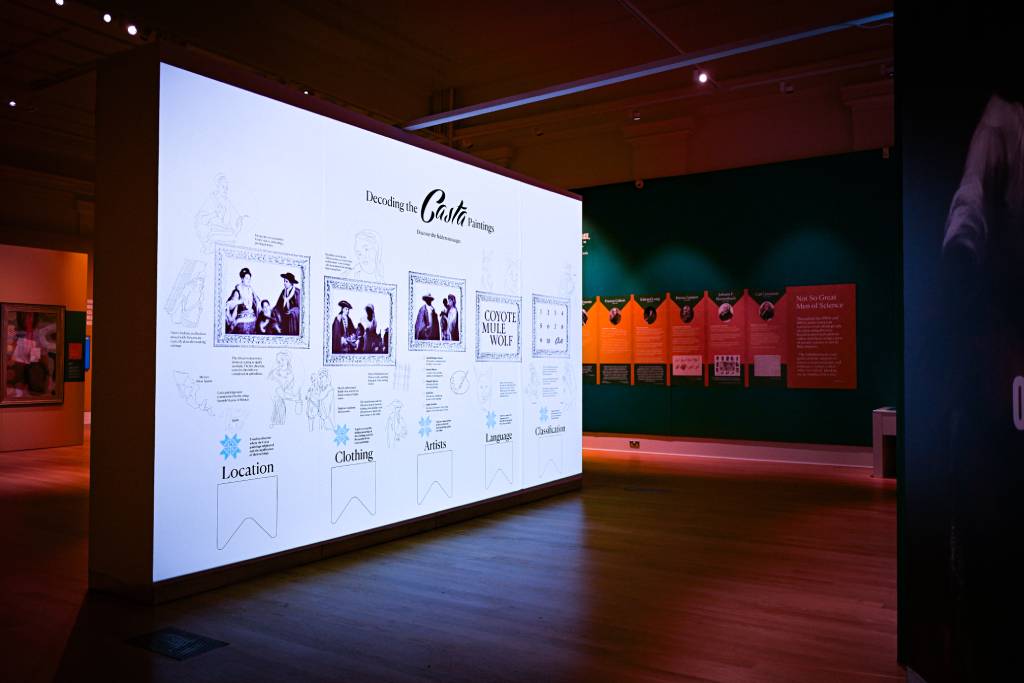
The exhibition explores the Casta Paintings Genre and develops an understanding of the history of racial prejudices within Western culture


De Espanol y Negra produce Mulato
18th Century | Oil on Canvas Translation: A Spaniard and a Black produce a Mule Definition of Mulato: A mule, someone with a big bum, big lips, and curly hair.
This image features a white male in a Spanish Army uniform worn between 1760 and 1790. They are depicted in a kitchen: a woman grinding chocolate in a mortar, a child offering a cup to the man with a cake. The woman’s attire, resembling that of a maid, is finely embroidered with native-inspired patterns. In the background, there are intricately decorated pottery pieces.
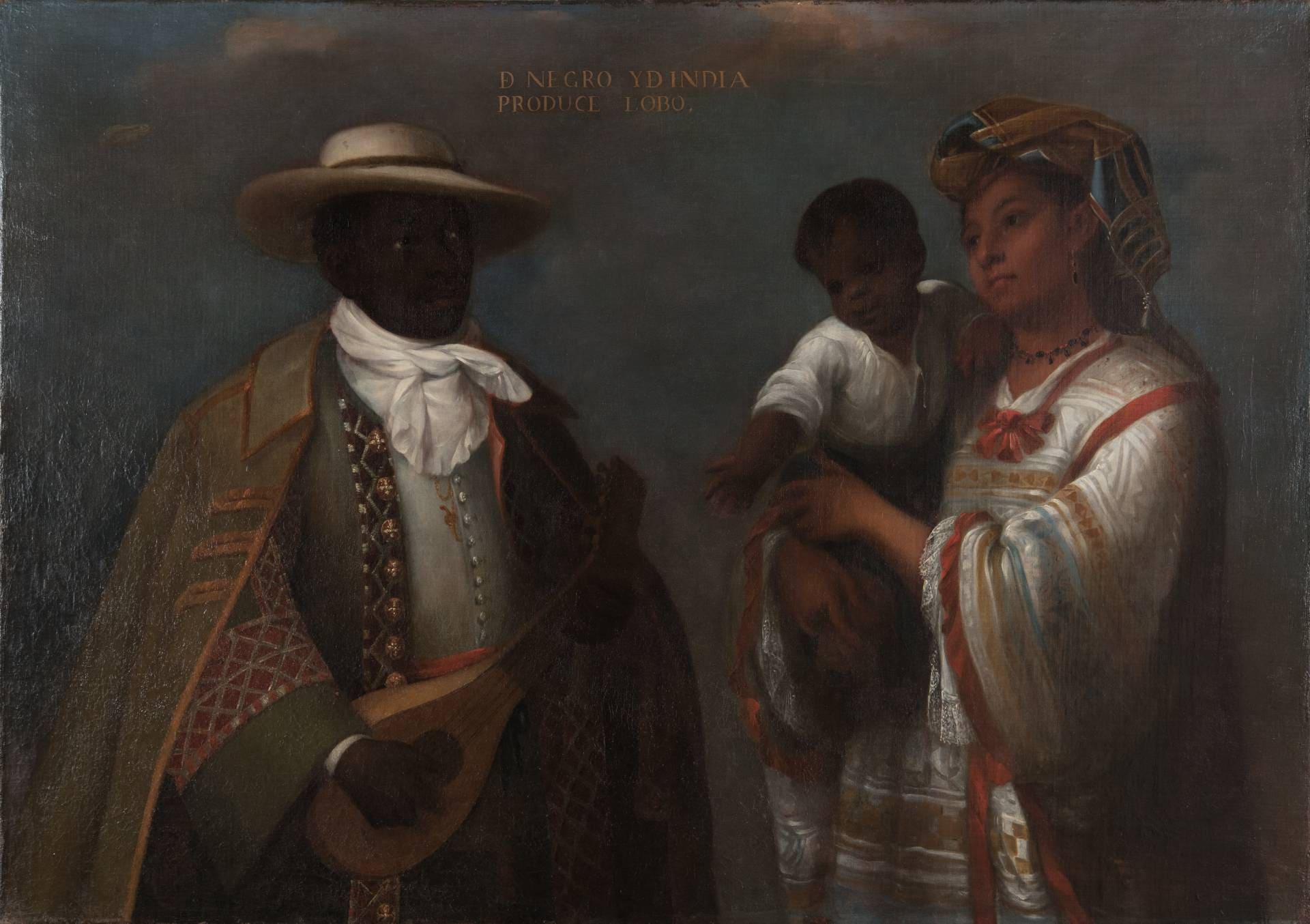
De Negro y Indios se Produce un Lobo
18th Century | Oil on Canvas Translation: A black and Indian make a Wolf.
This painting features a black male dressed in a coachman’s outfit alongside a woman holding a child. The woman’s attire, although with a Western appearance, retains significant cultural ties to her origins. Her top is a huipil, a traditional garment worn by indigenous women from central Mexico, adorned with embroidery and ribbons as depicted. Such attire was reserved for special occasions or individuals of high social status
De Indios y Lobo se produce u grifio que es tente en el aire
18th Century | Oil on Canvas Translation: An Indian and a wolf make something you throw up into the air.
In this painting, the man and woman wear traditional attire, including red/orange Rebozo Shawls dyed with Cochineal or cactus bugs. The child in the image contrasts with the adults by wearing Western clothing. The woman’s decorative jewelry suggests she holds a position of wealth or status.
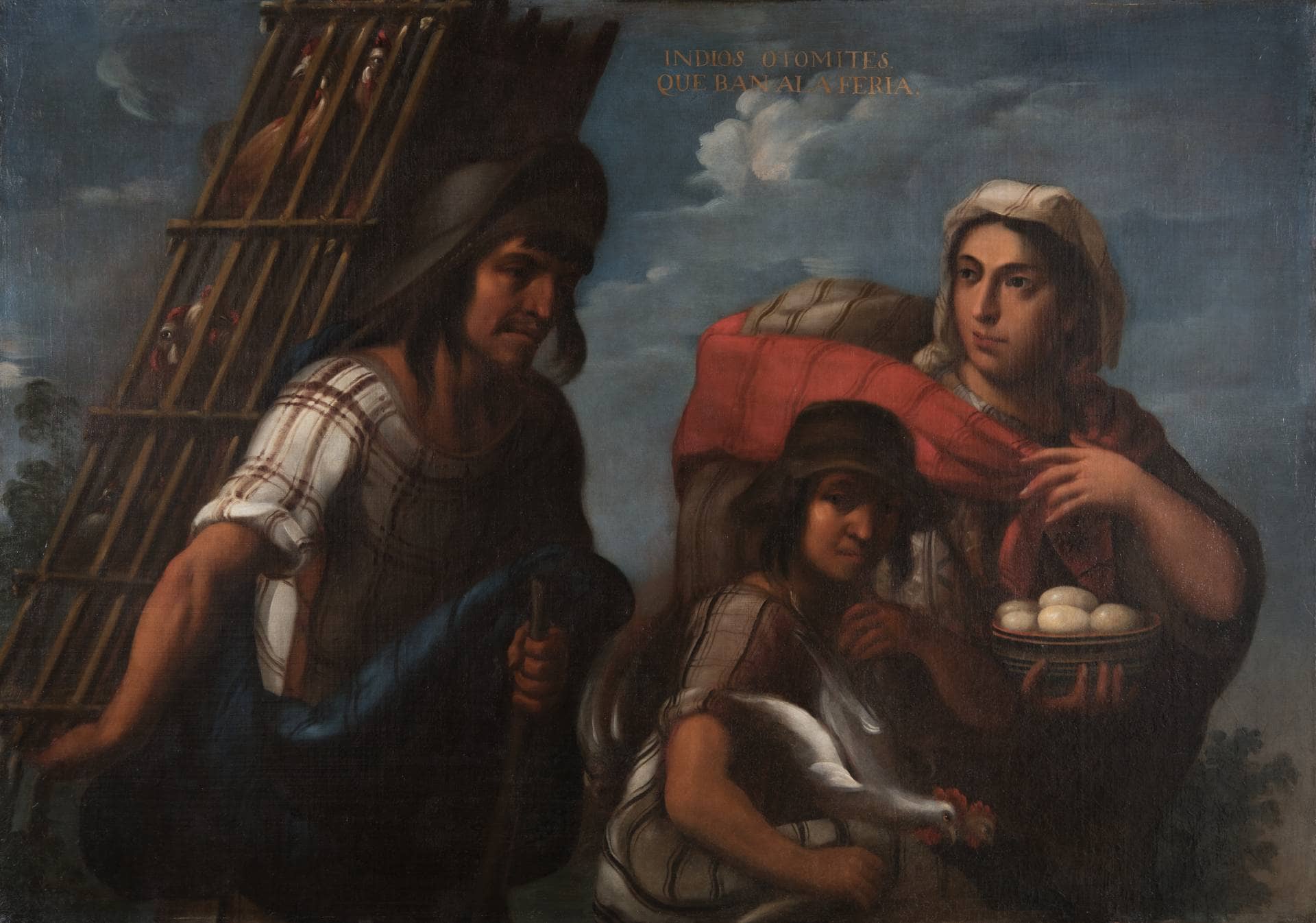
Indios otomies queue ban a la feria
18th Century | Oil on Canvas Translation: native Indians going to the market.
Indians who adopted Western clothing and Catholicism could work in the main towns. This image shows a poorly dressed family of farmers, possibly going to or coming from the market, with chickens in a cage and eggs in a basket. The child is dressed similarly to the male, and the fabric of the male’s clothing is used for the female and child’s clothing as well.
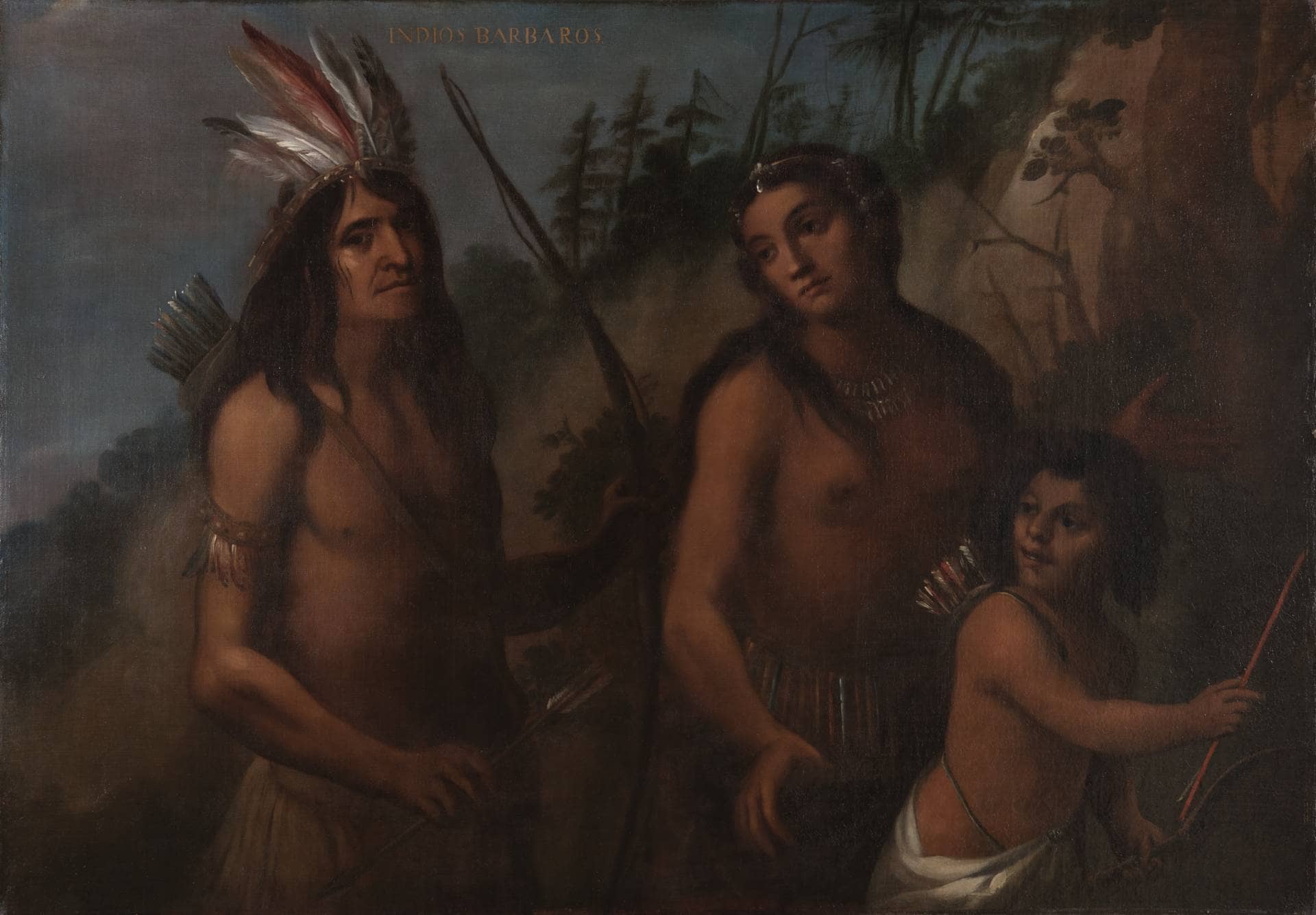
Indios Barbaros
18th Century | Oil on Canvas Translation: Indian barbarians. Definition of Barbarians: Indians who refused to conform in religion or clothing.
This image shows a family in traditional native dress in a forest, with the father and son holding bows and arrows. As the last in the set, this suggests they were from the lowest documented caste.
Expert Films from the Live CASTA Exhibition (Leicester Museums, 2023)
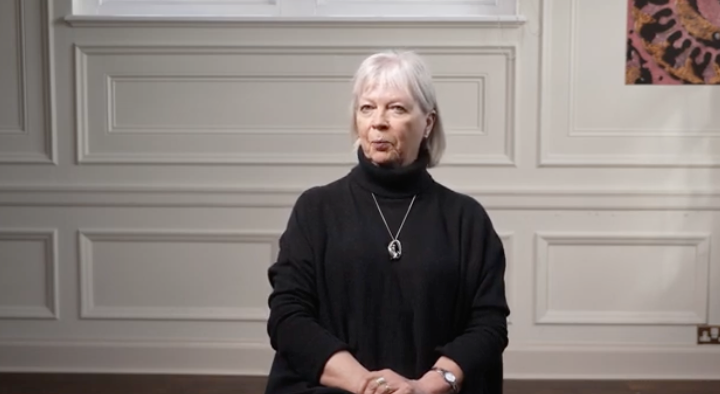
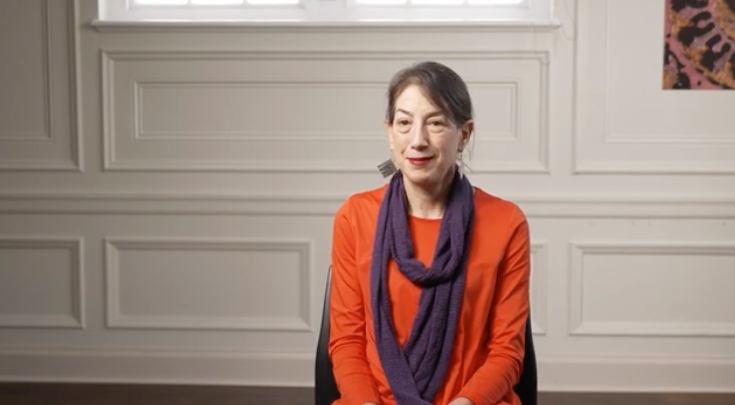
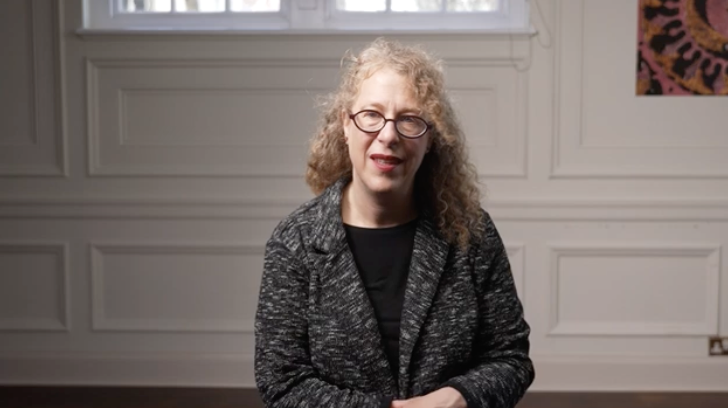
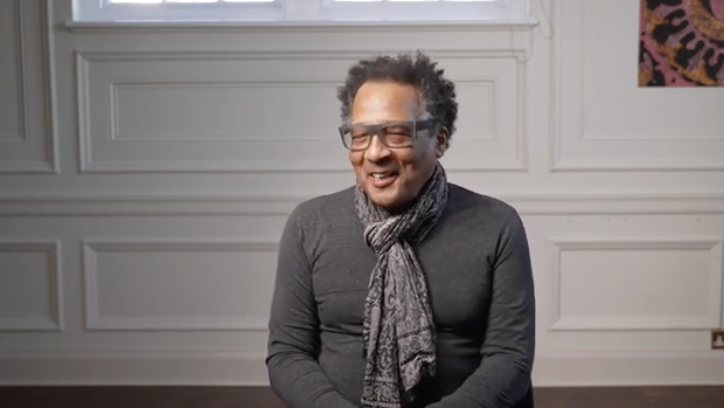
As part of the live CASTA: The Origins of Caste exhibition at Leicester Museums in 2023, Opal22 produced a series of expert films that were presented within the gallery space alongside the paintings. These films were developed to support public engagement with the works, offering historical context, scholarly interpretation and critical reflection.
Opal22 brought leading experts from the United States and the UK to Leicester to work directly with the collection. Their involvement enabled the paintings to be examined, contextualised and authenticated by internationally recognised authorities on Casta painting, colonial Latin America and racial classification. The resulting discussions were filmed and formed an integral part of the museum exhibition experience.
Contributors include Ilona Katzew (Los Angeles County Museum of Art), Susan Deans-Smith (University of Texas at Austin) and Professor Rebecca Earle (University of Warwick), all of whom have published extensively on Casta paintings and the genre. Cultural historian Michael Ohajuru also took part, offering a distinctive perspective informed by his work on Black British history and encountering the paintings without prior specialist knowledge of the genre.
These films are now included within the online exhibition, allowing audiences to experience the same expert insight that was embedded in the original museum display.